

Not a trabecular shunt.
Does not drain into Schlemm's canal.
QMAX · Glaucoma
Equalizing pressure across the optic nerve head.
Glaucoma damages the optic nerve through a pressure gradient between the inside of the eye and the fluid around the nerve. QMAX is a first-in-class implant designed to neutralize that gradient.
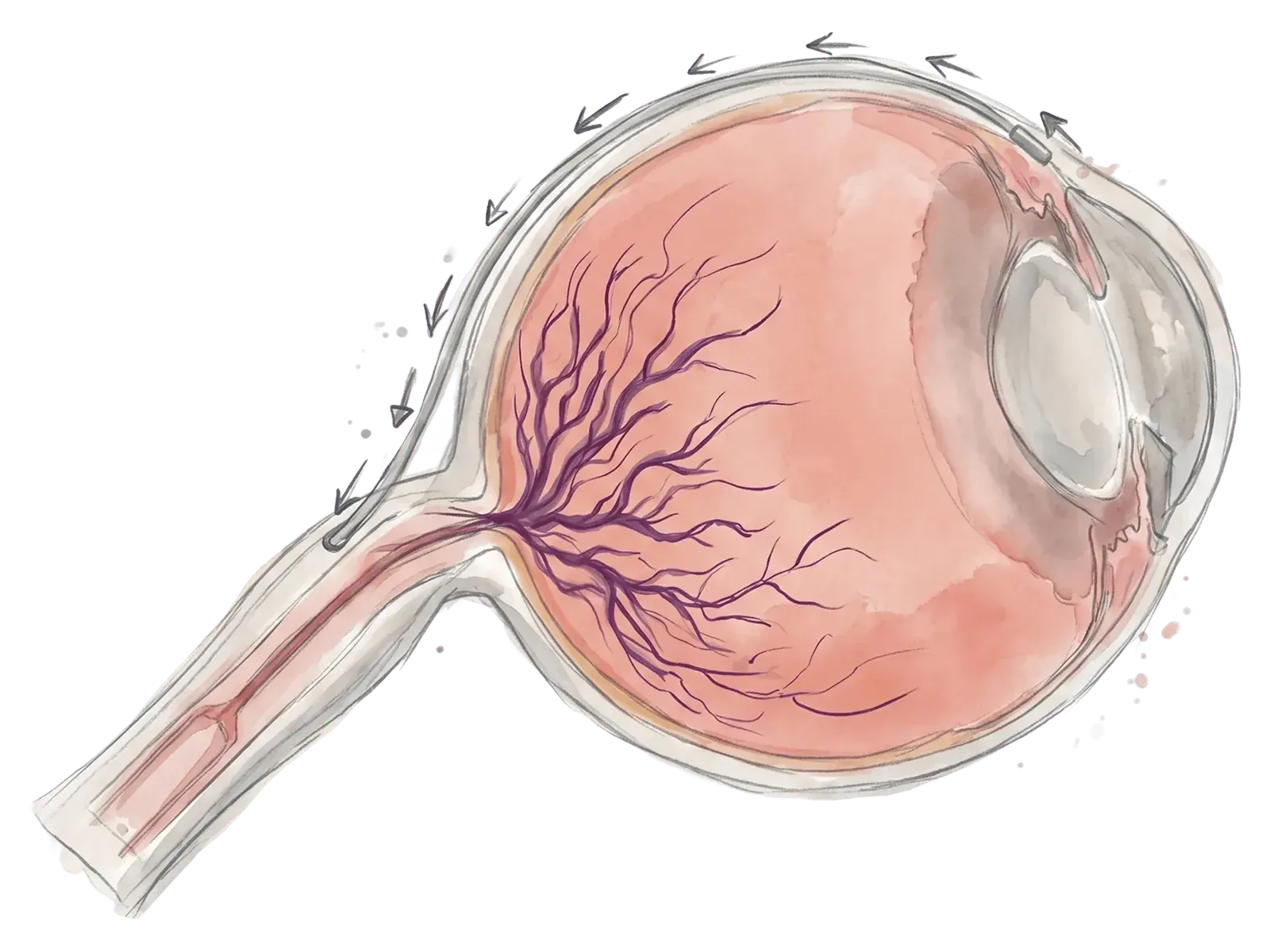
The optic nerve consists of roughly one million fibers, each one carrying pieces of the world we see from the retina to the brain. These fibres exit the eye through the semi-ridged mesh called the Lamina Cribrosa. Optic nerve fibres at the Lamina Cribrosa are exposed to two pressures: intraocular pressure (IOPIntraocular PressurePressure inside the eye, pushing outward against the optic nerve head) in front and the intracranial pressure (ICPIntracranial PressurePressure from cerebrospinal fluid behind the eye, pushing forward against the optic nerve head) in the space behind the nerve. What strains and damages the nerve is the difference between them, the translaminar pressure gradientTranslaminar pressure gradientThe pressure difference across the optic nerve head between IOP and ICP. A sustained gradient strains nerve fibers.. Lowering IOPIntraocular PressurePressure inside the eye, pushing outward against the optic nerve head alone narrows that gap from one side only. If the gradient remains, nerve fibers keep dying.
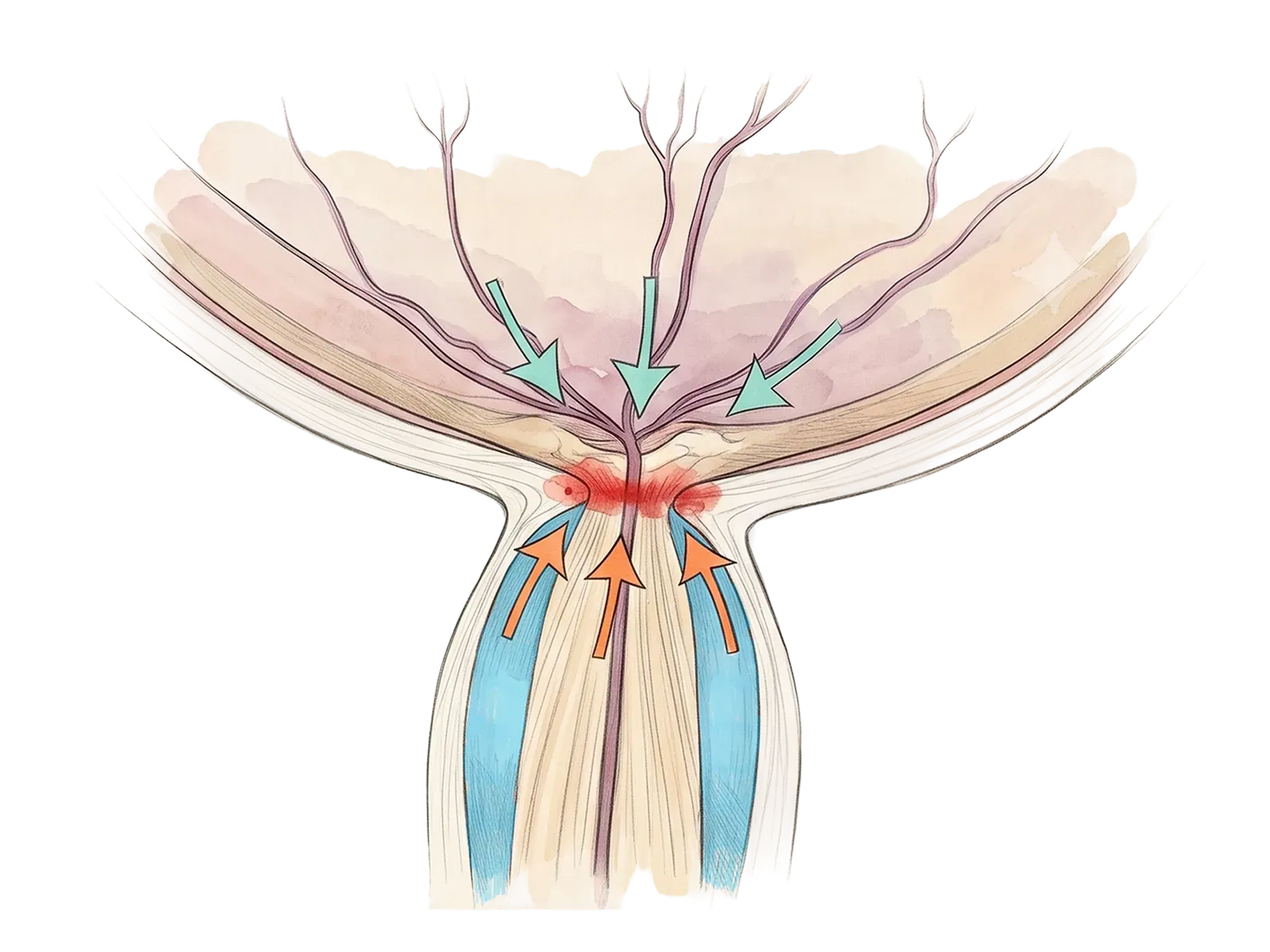
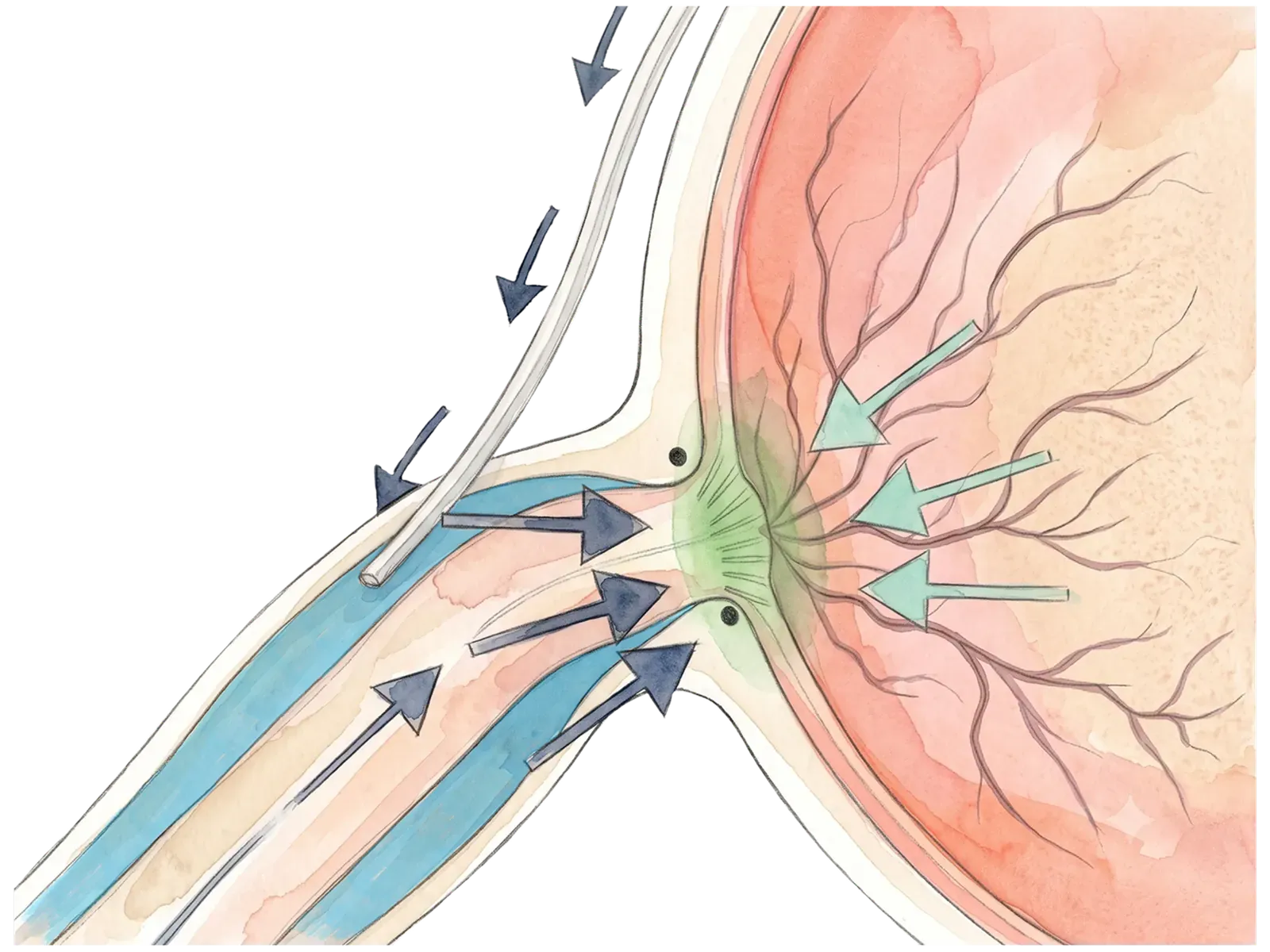
Connects the fluid pressures in the eye to the fluid pressure around the optic nerve
Equalizes pressure across the optic nerve headOptic Nerve HeadWhere ICP and IOP act on the optic nerve fibers as they exit the eye
Operates without a filtering bleb and without anti-fibrotic agents
Targets both high-IOPIntraocular PressurePressure inside the eye, pushing outward against the optic nerve head and normal-tension glaucoma populations
The result is a device designed to address what other surgeries leave on the table, including the patients whose vision keeps dropping at "normal" IOPs.

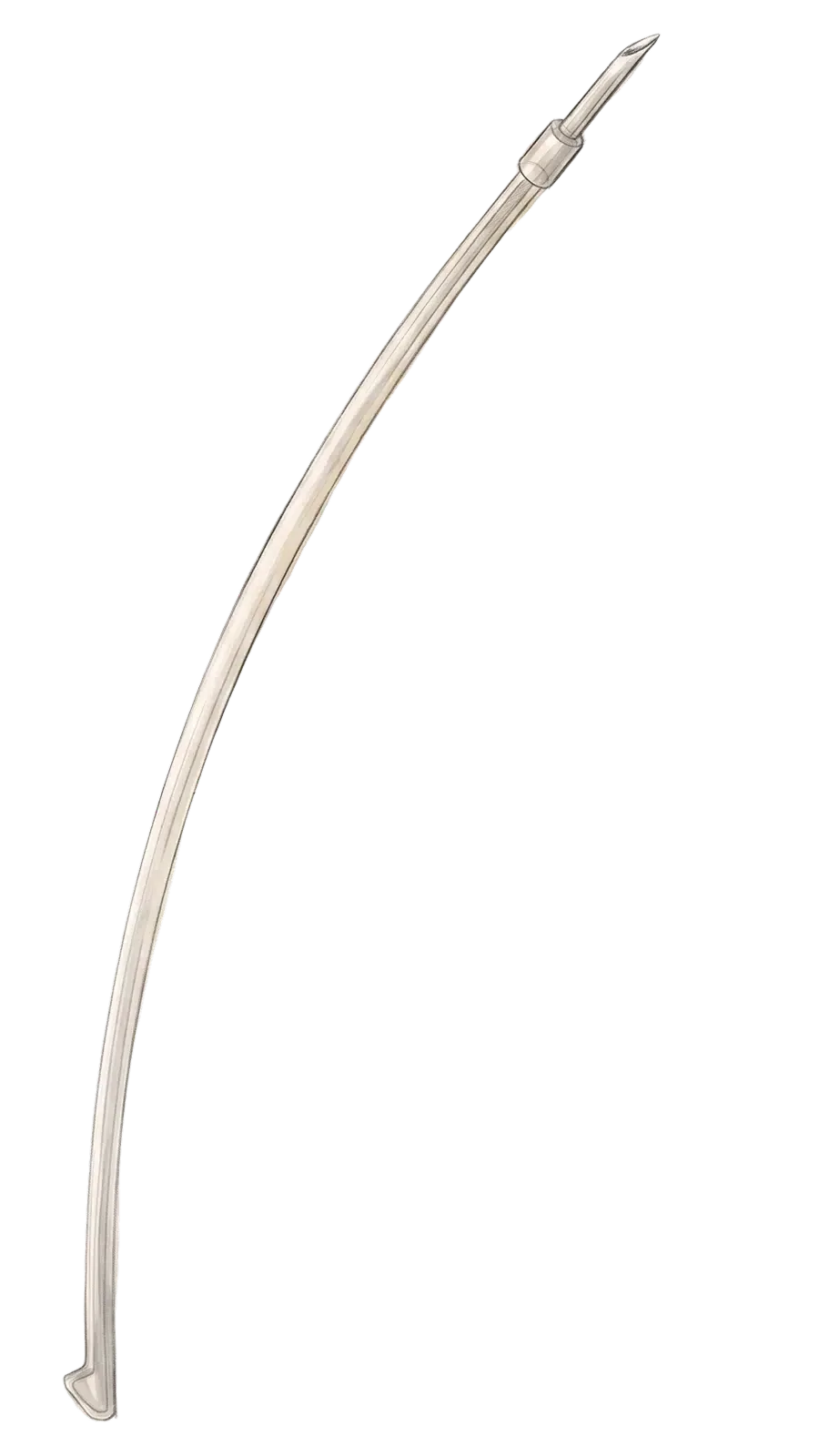
QMAX is delivered with QSCOPE, a single-use endoscopic system that gently tents the nerve sheath into a protected space and places the implant.
Simple, quick and repeatable
Single use minimally invasive endoscopic insertion
High-turnover workflow compatible
Free of post-op bleb management
QMAX is on a defined regulatory and clinical pathway toward US market access. The milestones below are forward-looking and subject to change; they are presented for investor and partner context, not as guarantees.
2023
First in Human
2026
Feasibility Study
2027
Endoscopic Delivery Feasibility Study
2028
FDA IDE
2028–2030
Pivotal Trials
2030
FDA De Novo Approval (targeted)
Insights from advisors who have reviewed QMAX.
I believe deeply in the team, the science, the product, the leadership. They have a real chance to transform glaucoma.
John Berdahl, MD
The first device targeting the actual mechanism behind visual field loss… a transformational change in the treatment of glaucoma.
Richard Beckman, MD
The QMAX addresses the fundamental limitations of current devices.
Reay Brown, MD
My only concern with the QMAX is that I didn't invent it myself
Michael Belkin, MD
10 global patent families covering the ONSAS mechanism, the device and delivery system, and the surgical method
First-in-human experience across three device generations, engineering out failure modes generation by generation
Clinical pathway routed through US sites